

On Saturday 18 July 2026, the town of Cascia, in the Italian region of Umbria, hosted “Germogli di Pace” (“Seeds of Peace”), the second Italian Multiplier Event of the Erasmus+ project EcoFarms4Prisons – Cooperation for the Improvement of Sustainable and Organic Social Farming Practices in Prison. The first one was organised in Volterra, where the Niccolini Institute is based.
Organised by EGInA, the event provided an important opportunity to present and disseminate the project’s approach, activities and results as EcoFarms4Prisons moves towards the conclusion of its three-year European journey.
Launched in September 2023, EcoFarms4Prisons was developed to strengthen the use of sustainable, organic and socially inclusive farming practices within prison settings. The project focuses particularly on supporting prison educators and professionals through vocational training, practical resources and innovative methodologies that can help people in prison acquire agricultural skills, environmental awareness and new opportunities for personal and professional development.
Sharing the EcoFarms4Prisons Approach
The Multiplier Event brought together environmental experts, civil society organisations, educators, project representatives and members of the local community to explore how sustainable agriculture and biodiversity can contribute to education, rehabilitation and social reintegration.
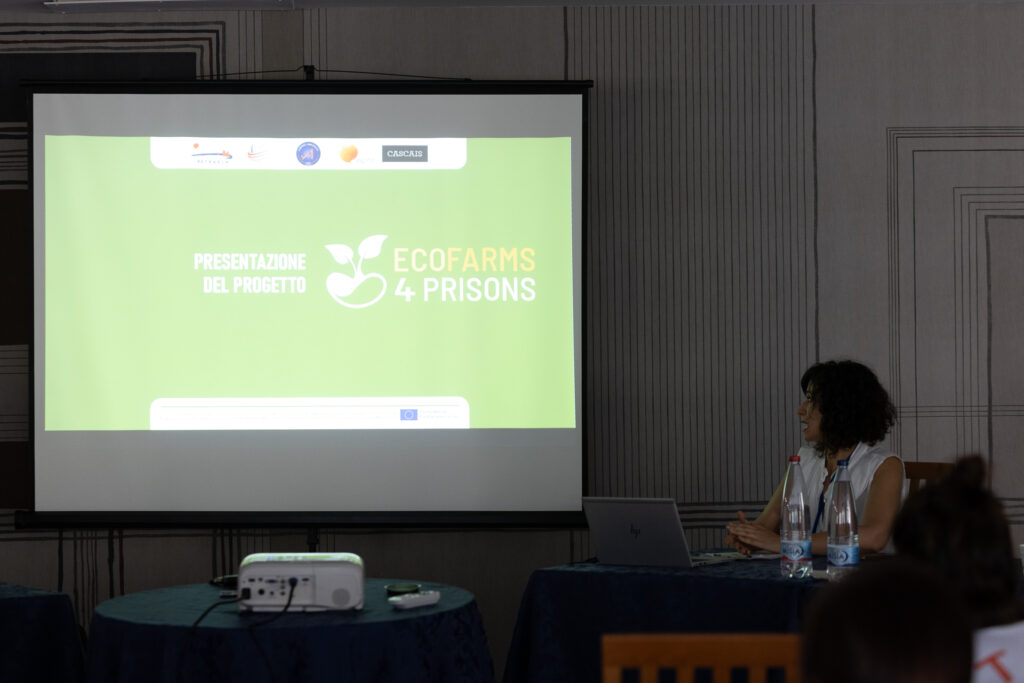
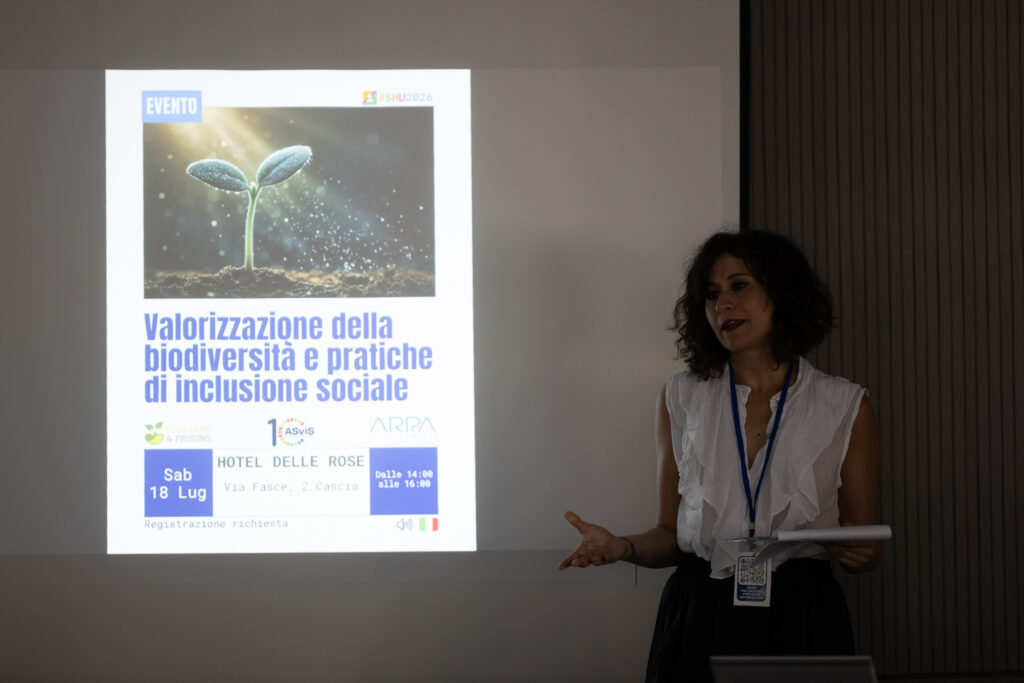
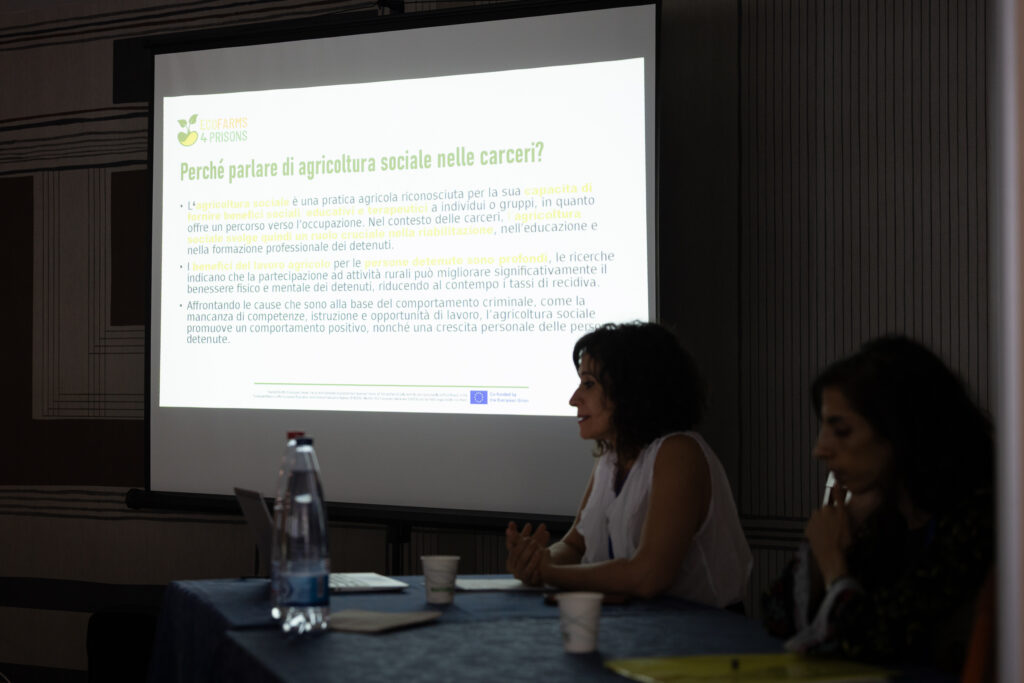
During the event, Chiara Borsini, Project Manager and Trainer at EGInA, presented the EcoFarms4Prisons project and its main achievements. Her contribution illustrated how eco-social farming can create meaningful learning environments within prisons, combining organic agriculture, biodiversity protection and vocational education.
The presentation also highlighted the project’s work to equip prison educators with the knowledge and tools needed to teach sustainable farming methods. Through this approach, agricultural activities become more than practical work: they can support responsibility, cooperation, self-confidence, wellbeing and the development of skills that may facilitate future employment and reintegration into society.
As the project approaches its conclusion, the event offered an opportunity to share the resources and knowledge developed by the European partnership. These include a systematic review of farming practices in European prisons, a free online course on eco-social farming, vocational education and training modules, and pilot experiences demonstrating how the project’s methodologies can be applied in prison settings.
Biodiversity, Social Farming and Reintegration
The programme placed the EcoFarms4Prisons experience within a broader discussion on biodiversity and socially inclusive agriculture.
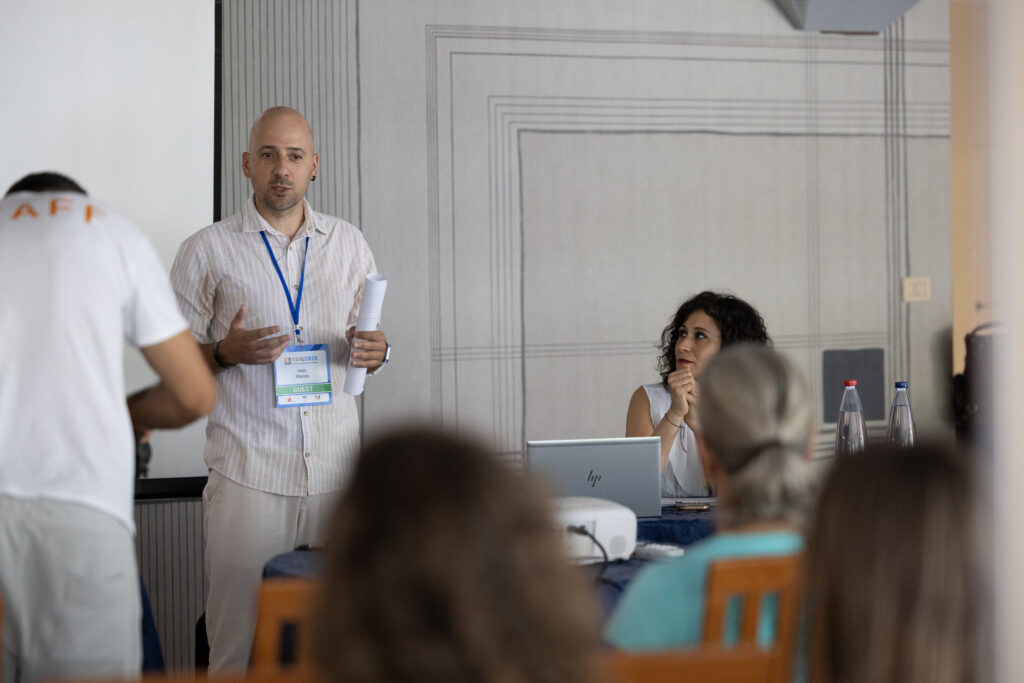
The opening keynote, “The Real Debt: Ecological Debt”, was delivered by Ivan Manzo of ASviS – the Italian Alliance for Sustainable Development. His contribution introduced the environmental challenges connected with the use of natural resources and emphasised the need to develop more responsible and sustainable relationships between people, communities and ecosystems.
This perspective is closely connected to the EcoFarms4Prisons approach, which promotes environmentally responsible farming while also responding to educational and social needs within prisons.
The following session presented practical experiences demonstrating how biodiversity and cultivation can support participation and social cohesion. Rosalba Padula of ARPA Umbria explored biodiversity as a bridge between environmental education and inclusion, while Angelo Fanelli, Founder of the Libero Pensatore Association, introduced Il Circolo del Grano, an initiative that uses cultivation to encourage cooperation, shared responsibility and stronger community relationships.
These contributions helped illustrate the wider potential of social farming and reinforced one of the central messages of EcoFarms4Prisons: working with nature can generate educational, professional and social benefits, particularly for people experiencing exclusion or limited access to learning and employment opportunities.
A Participatory Workshop Inspired by the Project’s Values
The event concluded with “Gardeners Without Borders”, a participatory workshop led by Angela M. Miceli, art gardener and expert in open-space and landscape design.
Through dialogue and practical activities, participants reflected on the symbolic meanings of seeds, plants, flowers and trees. These natural elements became metaphors for resilience, care, responsibility and personal growth—values that are also central to the rehabilitative and educational vision promoted by EcoFarms4Prisons.
The workshop encouraged participants to consider cultivation as an activity capable of connecting environmental awareness with individual and collective development. In this sense, planting and caring for living organisms can support patience, cooperation, continuity and a renewed sense of purpose.
Cultivating the Legacy of EcoFarms4Prisons
“Germogli di Pace” represented an important moment in the dissemination of EcoFarms4Prisons in Italy. By bringing the project’s results into dialogue with environmental organisations, educators, practitioners and the local community, the event helped broaden awareness of the role that sustainable farming can play within prison education and rehabilitation.
As EcoFarms4Prisons enters its final phase, its legacy lies in the practical resources, training materials and European experiences developed over the course of the project. These results will continue to support prison educators, vocational training professionals and organisations interested in introducing sustainable and organic social farming into correctional settings.
The Multiplier Event in Cascia therefore marked not only the closing phase of a European project, but also an opportunity to encourage the continued use and transfer of its results. The seeds planted through EcoFarms4Prisons can continue to grow through new educational practices, professional cooperation and initiatives that connect environmental sustainability with inclusion, dignity and new opportunities for people in prison.

